September 15, 2010
CURRENCY MANIPULATORS

Twenty-five years ago the USA forced Japan to appreciate its currency in order to correct its own bad books by fixing (temporarily) America's current account deficit. The Plaza Accord of 1985 led to rampant speculation in the Yen and a financial crisis and depression from which the Japanese have yet to recover. From the sidelines, having secured the return of Hong Kong and its capital, Beijing watched and learned.
Since the dotcom bubble popped and jobless recoveries, booms, and busts have America stalled, certain political factions believe that if Uncle Sam can force a similar appreciation of the Yuan on Beijing the American Dream can be saved. Chief among the politicians is Chuck Schumer (D-NY) and his chorus of taxpayer funded think tank reports and leading talking heads. One of the biggest proponents of the China tariff clique is Nobel Prize winning economist Paul Krugman.
Krugman used his NY Times column again today to call for tariffs on Chinese goods deciding that one lesson from the Great Depression - the Smoot-Hawley Act - is not worth heeding.
I've written many posts and Sinomania! Show episodes on the futility of trying to force Beijing's hand on Yuan. Do a search here and on the Sinomania! website and you'll come up with the same conclusion. America cannot fix its problems by manipulating international forex markets. Beijing unlike Japan is not America's satellite and cannot be told what to do and is not afraid of Washington. And the biggest reason why people like Krugman and Schumer know that the issue is just hot air is not the "threat" of a "nuke option" - Beijing selling its holdings of US Treasury securities - but because the average American mired in a deep recession can't afford to pay two and three times for all the stuff they buy from WalMart, Target, IKEA, and everywhere else!
Labels: currencies, financial crisis, forex, free trade, japan, schumer, yuan
# posted by Sinomania! : 9/15/2010 02:23:00 PM
1 Comments

September 14, 2010
Lawson to Open Nearly 100 Stores in Chongqing

Japan's second biggest convenience store operator
Lawson plans to open another 130 stores in China by end 2011 - 97 of them in Chongqing alone (the remainder in Shanghai). Lawson is a poster child of multinationalism starting as an outlet for an Ohio dairy farmer, being known for decades as Dairy Mart, Circle K, and owned by American, Canadian, and Japanese conglomerates.
Lawson is making a big push into Chongqing municipality -- China's fastest growing big urban market...
Labels: foreign investment, foreign trade, japan, spending
# posted by Sinomania! : 9/14/2010 02:40:00 PM
0 Comments
March 08, 2010
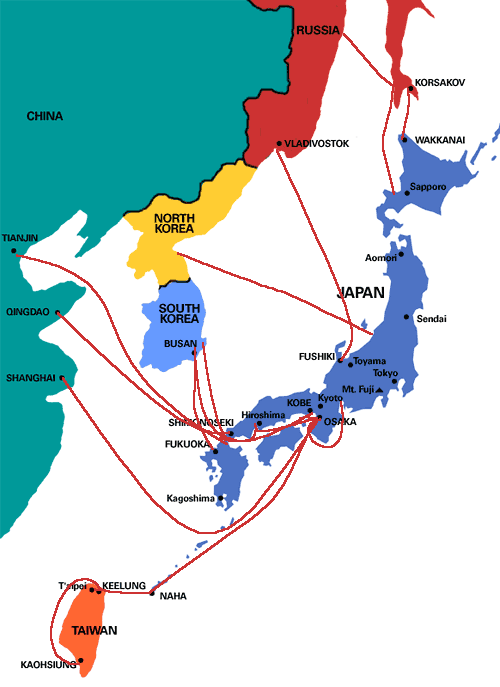
China Gets North Korean Port on Sea of Japan
Labels: exports, japan, russia, shipping, strategic
# posted by Sinomania! : 3/08/2010 04:08:00 PM
0 Comments
October 09, 2009
China-Korea-Japan Summit

East Asia's 'big three' renew a push for greater regional collaboration this weekend with a
tri-partite summit in Beijing hosted by Chinese PM Wen Jiabao. Already Japanese PM Hatoyama and (South) Korean President Lee met in Seoul today. On the table for Saturday will be new talks on the concept of creating an EU style economic unit with perhaps someday a united currency....
Labels: foreign relations, japan
# posted by Sinomania! : 10/09/2009 09:29:00 AM
0 Comments
September 22, 2009
Greater Chinese Prosperity Zones

New York is the scene for a blizzard of China pow wows as President Hu Jintao met with the new Japanese Prime Minister Hatoyama and President Obama. Hatoyama waxed eloquently about turning the East China Sea into a "sea of fraternity" and
proposing the creation of an East Asian Community based on the EU model. Hu invited Hatoyama to Beijing for a regional summit in December.
Labels: foreign relations, hu jintao, japan, obama, un
# posted by Sinomania! : 9/22/2009 02:41:00 PM
2 Comments
August 31, 2009
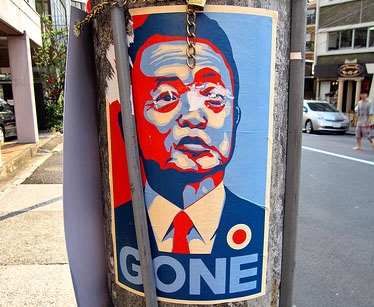
Japan Ends One Party Rule - DPJ to Focus on China Ties
Labels: democracy, foreign relations, japan
# posted by Sinomania! : 8/31/2009 10:32:00 AM
0 Comments
May 27, 2009
Japan Improves on China Trade

China is key to recovery in the Japanese economy as it is Japan's number 1 export market. Indications are the dramatic drop in exports to China (not nearly as dire as the near 50% drop in exports to USA in April) has slowed. The
data is mixed and far from a definite up trend. But signals are the bottom may have been reached at least in terms of Japan-China trade....
Labels: chinese trade, exports, japan
# posted by Sinomania! : 5/27/2009 10:58:00 AM
0 Comments
April 29, 2009
China-Japan Bilateral Talks Urge Currency Swaps

Labels: currencies, foreign exchange, foreign trade, japan
# posted by Sinomania! : 4/29/2009 02:17:00 PM
0 Comments
February 17, 2009
Energy Security: Russia China Oil Deal On

When first announced last October by PM Wen Jiabao $25 billion in loans was proposed from China National Petroleum Corp. to Roseneft for a pipeline directly from the emerging eastern Siberia oil fields to connect with China's oil pipeline and refinery centers.
As announced today Roseneft will get $15 billion (US dollars) and
Transneft - Russia's pipeline monopoly - $10 billion. When complete, China will get a steady supply of crude oil for 20 years. This is a major blow to the Japanese government which tried for years to prevent a pipeline direct to China...
Labels: asian energy security grid, energy security, japan, oil, peak oil, russia
# posted by Sinomania! : 2/17/2009 02:05:00 PM
0 Comments
May 08, 2008
China, Japan Announce "Common Strategic Interests"

The first state visit by a Chinese President in a decade has led to a joint agreeement for "Consolidating Exchange and Cooperation Between Japan and China" including a possible end to disputes over the gas and oil riches under the East China Sea. Discussions between Hu Jintao and Japanese Prime Minister Yasuo Fukuda today reveal the two sides may agree to
jointly develop the gas and oil of Shirikaba gas field and other disupted areas.
Labels: china, fukuda, global security, hu jintao, japan, oil
# posted by Sinomania! : 5/08/2008 02:25:00 PM
1 Comments
February 15, 2008
Japan Forex Reserves Growing "Suspiciously Fast"

"Japan’s reserves are growing suspiciously fast. Japan’s foreign reserves expanded from US$946 billion in September 2007 to US$996 billion in November, an increase of US$50 billion in four months. Assuming a 2.5-3.0% return on the underlying assets, Japan should only be enjoying US$25-30 billion in annual investment earnings, or US$6-8 billion a quarter. Further, it is widely assumed that Japan has the bulk (90%) of its reserves in USD, and the MoF never diversified away from USD. With such low holdings of EUR, valuation changes – from the rise in EUR/USD – should not have been a major factor generating gains in reserves. Indeed, what is embedded in our reserve tracker file assumes 90% USD holdings. Our presumptive calculations identified a US$13.7 billion gain during September-January due to the returns on the underlying assets, and another US$18 billion from valuation changes, leaving US$18 billion of the reserve increases unexplained by our metric. Could the MoF have conducted secretive interventions worth US$18 billion? "
Morgan Stanley believes the net result is not stealthy intervention but skillful day trading of Yen/Euro positions and that the data reveals Japan is diversifying away from the US Dollar to over 20% Euro composition in its foreign exchange reserves.
If true, this raises another interesting question: Is America's loyal Asian satellite dumping the Dollar?
Labels: currencies, euro, foreign exchange, forex, globalization, japan
# posted by Sinomania! : 2/15/2008 02:03:00 PM
0 Comments
February 08, 2008
Japan's Scientific Killing Spree

Japanese whaling is about as "
scientific" as the experiments on Chinese in Manchuria in the '30s and '40s.
It's time to end the Japanese genocide on whales.
Labels: genocide, japan, whales, whaling
# posted by Sinomania! : 2/08/2008 10:02:00 AM
0 Comments

Subscribe to Posts [Atom]
