September 29, 2010
TRADE WAR: US POLS WANT GREAT DEPRESSION II

According to Reuters the US House of Representatives is poised to approve a bill to impose exorbitant tariffs on Chinese goods by declaring that the Chinese government "subsidizes" the exchange rate of the Yuan. Frustrated by the Executive Branch's longstanding refusal to declare Beijing a currency "manipulator" a corrupt bipartisan House is pandering to big unions, anti-China blowhards, and the widespread ignorance of the vast majority of Americans about America's deep interconnectedness with China.
But will the Senate approve and President Obama sign the legislation and risk a trade war, huge inflation - increases in tariffs would be passed directly to consumers, currency retaliations around the world, and another Great Depression?
Labels: currencies, yuan
# posted by Sinomania! : 9/29/2010 09:13:00 AM
1 Comments

September 15, 2010
CURRENCY MANIPULATORS

Twenty-five years ago the USA forced Japan to appreciate its currency in order to correct its own bad books by fixing (temporarily) America's current account deficit. The Plaza Accord of 1985 led to rampant speculation in the Yen and a financial crisis and depression from which the Japanese have yet to recover. From the sidelines, having secured the return of Hong Kong and its capital, Beijing watched and learned.
Since the dotcom bubble popped and jobless recoveries, booms, and busts have America stalled, certain political factions believe that if Uncle Sam can force a similar appreciation of the Yuan on Beijing the American Dream can be saved. Chief among the politicians is Chuck Schumer (D-NY) and his chorus of taxpayer funded think tank reports and leading talking heads. One of the biggest proponents of the China tariff clique is Nobel Prize winning economist Paul Krugman.
Krugman used his NY Times column again today to call for tariffs on Chinese goods deciding that one lesson from the Great Depression - the Smoot-Hawley Act - is not worth heeding.
I've written many posts and Sinomania! Show episodes on the futility of trying to force Beijing's hand on Yuan. Do a search here and on the Sinomania! website and you'll come up with the same conclusion. America cannot fix its problems by manipulating international forex markets. Beijing unlike Japan is not America's satellite and cannot be told what to do and is not afraid of Washington. And the biggest reason why people like Krugman and Schumer know that the issue is just hot air is not the "threat" of a "nuke option" - Beijing selling its holdings of US Treasury securities - but because the average American mired in a deep recession can't afford to pay two and three times for all the stuff they buy from WalMart, Target, IKEA, and everywhere else!
Labels: currencies, financial crisis, forex, free trade, japan, schumer, yuan
# posted by Sinomania! : 9/15/2010 02:23:00 PM
1 Comments
March 15, 2010
Krugman's Last Stand

Columnist
Paul Krugman of the New York Times says the US government needs to "take a stand" against China by declaring that Beijing "manipulates" its currency (Renminbi) and slap big extra tariffs on Chinese imports. Krugman began the year with the same message and seems willing to stake his reputation on his quixotic quest. Frankly the US has already taken a stand on the issue of the Yuan/Dollar exchange rate and been stood down. Further Krugman's simplistic explanation of alleged Chinese "mercantilism" is surprising from a Nobel Prize winning economist. To blame global economic imbalance on imports of Chinese goods is absurd.
To declare China a currency manipulator while ignoring Tokyo's support of the Yen and other currencies pegged to the US dollar including oil exporting nations and whole regions (the Caribbean, etc.) is a selective and hostile act. And if the Yuan is so undervalued why are the EU, Brazil, Australia, and other countries with important China trade not joining the USA in a stand against China?
Millions of Americans are already cutting back on what they buy and trying to make do with less. Do we need the cost of everything to go up because of additional tariffs on Chinese goods? Does Krugman think stagflation will help the American economy recover?
Labels: anti-china, currencies, forex, free trade, renminbi, yuan
# posted by Sinomania! : 3/15/2010 11:52:00 AM
0 Comments
March 11, 2010
Obama's China Currency Comment

Headline writers this afternoon say President Obama "urged" China to stop controlling its currency. What did Obama say exactly? Long into a
banal booster speech at the annual meeting of the Export-Import Bank of the United States (a federal government agency), Obama said
"China moving to a more market-oriented exchange rate will make an essential contribution to that global rebalancing effort."
It surprises me Obama continues to spend political capital in a pointless pursuit to coerce Beijing to appreciate its currency. Washington can urge China all it wants but Beijing has made its position on Renminbi very clear. Just this week at the National People's Congress session China said the Yuan's unofficial peg to the US dollar will end and appreciation up to 10% over the short to medium term is expected.
A move by Beijing to drastically create a more "market-oriented" exchange rate would mean reducing China's dollar holdings in favor of other currencies or gold. Is this ultimately what Washington really wants? It is also hard to argue that the exchange rate of the Yuan is that out of whack for US exporters when China is year after year the fastest growing market for US exports.
A far better use of rhetoric and effort would be for Obama to push Beijing to fulfill its promise to enter into the WTO Government Procurement Agreement (GPA) and open up potentially billion$ in opportunities to American businesses. So far no moves on the GPA have been made by US Trade Rep Ron Kirk or anyone else in the Obama administration. Why not?....
Labels: currencies, exports, foreign exhange, forex, goverment procurement, obama, wto, yuan
# posted by Sinomania! : 3/11/2010 01:35:00 PM
1 Comments
November 30, 2009
No Word on Yuan at EU-China Summit

The EU is now China's number 1 trading partner. For the EU China is now number 2 after the USA. EU imports from China are down in the great recession to just over $65 billion euros in the 1st Half of 2009. Overall China accounts for 17% of all EU imports. As in the USA China is a growing market for exports accounting for 7% of EU exports, up one percent from 2008. The top EU exporters to China are Germany, France, Italy, UK, and Netherlands - in that order. While the EU overall has a trade deficit with China, the smallest individual deficits are in Germany and France which have the healthiest trade relations with China.
Click here for more detail on EU-China trade....
Labels: currencies, euro, foreign relations, foreign trade, forex, yuan
# posted by Sinomania! : 11/30/2009 09:55:00 AM
0 Comments
October 06, 2009
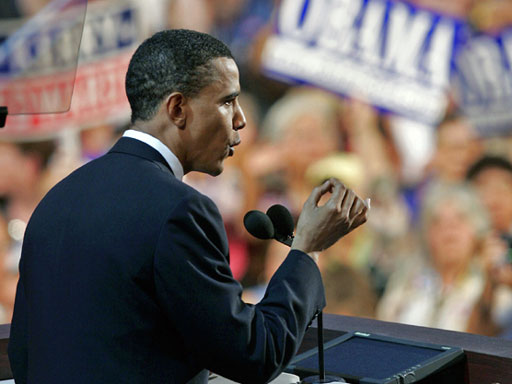
TRADE WAR: Obama Labor Showdown on China Currency
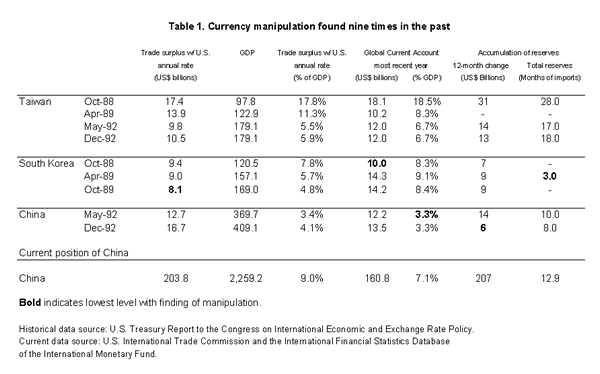
Big labor is pushing hard for President Obama to declare China a currency manipulator when his Treasury department must report to Congress next week. Obama maintained that Beijing manipulated the Yuan exchange rate up to the eve of the presidential election and as freshman Senator from labor stronghold Illinois. Now the AFL-CIO and others want Obama to live up to his rhetoric. Will he disappoint them as he has so many other supporters?
If labor doesn't get their way, which most economists say would be detrimental to both nation's trade and finances, expect a big push for anti-dumping countervailing duties from Congress and the Commerce department. The USA has not accused any nation of manipulating its currency since 1994 when it last leveled that designation on China (see graph at left)....
Labels: currencies, free trade, obama, yuan
# posted by Sinomania! : 10/06/2009 04:39:00 PM
0 Comments
September 08, 2009
Will China Switch to a Gold Standard?

A swirl of pitches from "gold bugs" and currency commenters say
China is buying gold and so should you. The
excited headlines are based on various remarks by former and current Chinese government officials on Beijing's concern over the health of the almighty (US) dollar. Many of the remarks most often cited were said over the past year and some date back several years.
It is true Beijing is buying gold from domestic production, slowly, and some say secretly - initially off the official statements of the People's Bank of China. But the amount of gold held is a tiny fraction of the $2.13 trillion (as of 6/30/2009) foreign exchange reserves Beijing holds.
Will China switch to a gold standard? That question has tantalized speculators on and off throughout history. Little more than a century ago, Beijing's decision to not follow the USA and Japan with a gold standard may have contributed to the collapse of the Chinese currency (based on a silver standard) by the 1940s.
One thing stands out - talk of internationalizing Renminbi is everywhere. Henry Kissinger predicted on Bloomberg TV just a few weeks ago that an alternative international currency will probably emerge based around the Yuan. Investment guru "Dr. Doom" Marc Faber once predicted that the world's finances would become based on the dollar, euro, Yen, Yuan, and gold.....
Labels: currencies, dollar, euro, gold, renminbi, yuan
# posted by Sinomania! : 9/08/2009 11:06:00 AM
0 Comments
September 01, 2009
Thailand, Russia Explore Yuan Currency Swap

Labels: currencies, foreign trade, forex, yuan
# posted by Sinomania! : 9/01/2009 10:09:00 AM
0 Comments
July 20, 2009
Shanghai Bubbly

Labels: chinese stocks, treasury, yuan
# posted by Sinomania! : 7/20/2009 10:13:00 AM
0 Comments
July 02, 2009
Second HK Bank to Issue Yuan Bonds

Labels: currencies, panic of 2008, yuan
# posted by Sinomania! : 7/02/2009 11:40:00 AM
0 Comments
June 30, 2009
Hong Kong-China Trade Settlement in Yuan by July

Labels: chinese trade, currencies, forex, renminbi, yuan
# posted by Sinomania! : 6/30/2009 11:52:00 AM
0 Comments
April 16, 2009
Is China Hoarding Copper?

Lots of
speculation in the news about moves by the State Reserve Bureau in Beijing to buy huge amounts of primary metals, particularly copper but also aluminum and cobalt. Is China planning a copper standard to back the Yuan? Is Beijing stockpiling industrial resources while the global economy is down in order to be ready for the next boom cycle? Or is China really still chugging along at full speed (compared to sluggish Western economies) despite the impact of the Panic of '08?....
Labels: currencies, foreign exchange, forex, renminbi, yuan
# posted by Sinomania! : 4/16/2009 04:10:00 PM
0 Comments
March 06, 2009
China Central Bank Says Currency Policy "Needs No Changes"

"The question should be raised to some countries where the financial crisis originated from: what's going to happen eventually on your side?" We have to make multiple plans and analyze various scenarios since there is obviously great uncertainty on their side..."
Labels: banking, currencies, panic of 2008, renminbi, yuan
# posted by Sinomania! : 3/06/2009 09:21:00 AM
0 Comments
January 23, 2009
Does China Manipulate its Currency?
But what can the USA do about it? Unlike Japan, the USA cannot tell Beijing what to do. So there will be no "Plaza Accord" with Beijing to force a major appreciaiton of the Yuan. Beijing is not afraid of the USA. That was amply demonstrated on January 11, 2007, when the Chinese shot down one of their weather satellites to demonstrate they can take out any rival's communications ability.
This week's Economist mag recognizes the currency conundrum: the choices for Obama are between the proverbial rock and a hard place: veto any Congressional measure to impose countervailing duties on Chinese imports or put them in place only to see them reversed by the WTO before massive price inflation occurs.
Labels: currencies, free trade, yuan
# posted by Sinomania! : 1/23/2009 09:57:00 AM
0 Comments
January 21, 2009
Geithner Confirmation: China Currency "Significant Issue"

"I believe that it is in the interests of the global economy, not just our interests, that our major trading partners move over time to a more flexible exchange rate system."
Geithner pointed out that other major trading partners of USA (read: Japan) also need watching.
Is this a sign that the Democratic controlled Congress and President Obama will slap countervailing duties on China? And will the resultant price inflation of nearly every good bought and sold in the USA lead to wage inflation or just further erosion in standards of living?
Labels: currencies, foreign exchange, free trade, yuan
# posted by Sinomania! : 1/21/2009 02:39:00 PM
0 Comments
January 20, 2009
China-Hong Kong Currency Swap as Yuan Weakens
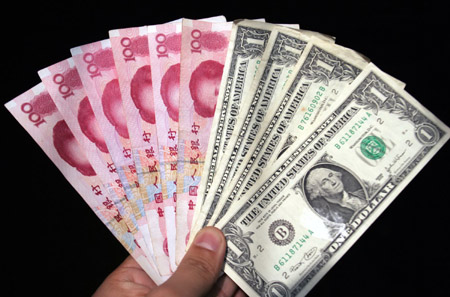
Meanwhile in other currency news, the Yuan has slipped 2% against the dollar since the start of the year. The Yuan gained 6.6% in 2008. The Yuan had steadily appreciated (in response to USA government pressure) since the defacto dollar peg ended in 2005...
Labels: currencies, yuan
# posted by Sinomania! : 1/20/2009 06:55:00 AM
0 Comments
December 24, 2008
Yuan Trade Settlement - Big Step Toward Currency Convertibility
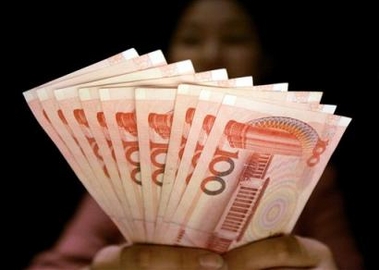
Beijing will soon allow several trials of Yuan trade settlement. First trade between the Pearl River Delta megalopolis, China's export powerhouse, and the Yangtze delta region - the "Dragon's Head" of Shanghai. And trade between the Hong Kong and Macau special administrative areas. Additionally, certain businesses in Hong Kong may also settle in Yuan. On the horizon will be a trial to settle trade between Yunnan and Guangxi and ASEAN nations in Yuan. (
source:Dow Jones/WSJ)
This is a very significant change and important to watch closely as it represents a first step toward Beijing's plan of turning the Yuan into a regional Asian currency.
In a related move, Beijing will allow Taiwan banks operating on the mainland to offer Yuan services.
Labels: chinese trade, currencies, foreign trade, yuan
# posted by Sinomania! : 12/24/2008 10:20:00 AM
0 Comments
December 15, 2008
As Economy Slows China Speeds Financial Reforms

A
noted Chinese economist forecasts economic growth declining in China to the third quarter of 2009.
Over the weekend China's all-powerful
State Council released a series of reform measures to the country's financial system.
The headline grabber is an
increase of M2 money supply of 17% next year but more important are some rule changes that could boost the Shanghai and ShenZhen stock markets:
New futures in steel and grain
A big push for corporate bonds particularly of companies in infrastructure building and supply. For example, insurance companies are encouraged to invest in such bonds and banks will be allowed to buy and sell bonds offfered on the exchanges.
Creation of Real Estate Investment Trusts (REIT) on a trial basis.
And further reform of the Yuan including trade settlement in Yuan with neighboring countries.
Morgan Stanley in Hong Kong believes the actions taken to date by Beijing will be enough to keep China out of recession but
plenty of risks remain.
Labels: financial crisis, money, panic of 2008, yuan
# posted by Sinomania! : 12/15/2008 09:26:00 AM
0 Comments
October 08, 2008
Is Bretton Woods II Dead?

The coordinated
rate cuts by central banks around the globe today included China. The faded G7 powers and their corporate and state-owned (BBC, for example) press still view the so-called "subprime," "credit," "liquidity," financial crisis as an Atlantic Alliance issue. Nothing could be further from the truth. China is at the core of the financial system as much as the USA since they both depend on the "Bretton Woods II" regime of financing trade deficit with borrowed dollars. For years the USA has agreed with China that 'you buy our goods, we buy your debt.' That system is now unravelling.
A week ago the President of France Nicholas
Sarkozy said "Laissez-faire is finished." He joined the call first made last year by outgoing German Chancellor Gerhard Schroeder for a G7 summit to fix the world's financial mess.
But what we really need is a Bretton Woods III conference where the USA, the EU, and China sit down and hammer out what the world's financial future will be. Certainly rich holders of dollars such as Japan, Russia, and financial centers of the Middle East should be there too as important participants.
If the future will be multipolar balanced by the dollar, the Euro, the Yen, Renminbi (Yuan), and Gold, as famous gloomsayer Mark Faber forecasts, then we need to get together now to craft a new system.
Labels: bretton woods ii, dollar, financial crisis, foreign exchange, gold, yuan
# posted by Sinomania! : 10/08/2008 03:48:00 PM
0 Comments
April 22, 2008
Dollar v Yuan

An interesting
discussion underway at Brad Stetsor's blog at the most excellent
RGE Monitor website on the dollar's shrinking value and its ultimate impact on China centers on a hot editorial in the Shanghai Daily that says:
"The negative results of the US dollar's decline are evident: the rising prices
of all primary products, the intensified pressure on inflation globally, the confusion in the settlement of international transactions, etc. Worst of all, this is the US' disguised way of avoiding paying off its debts to foreign
countries."
The need for the dollar as the chief medium of exchange and unit of account in trade gives it an advantage that can't be matched at present. If the RMB Yuan matures, is fully convertible, and Chinese financial markets continue to advance the day may come when the Yuan may supplant the dollar. Morgan Stanley analysts still believe the most likely challenger to the dollar will be the Yuan or a currency unit centered on it.
Labels: china, currencies, dollar, foreign exhange, renminbi, yuan
# posted by Sinomania! : 4/22/2008 11:52:00 AM
0 Comments

Subscribe to Posts [Atom]
